











.png?width=104&height=104&name=div%20(7).png)


After months of planning, vendor conversations, configuration decisions, user training, and go-live preparation, your new communications platform is finally launched. The implementation partner hands over the keys. The project is marked complete. Everyone takes a deep breath.
Then, six months later, reality sets in.
Users are still relying on old habits. IT is spending more time than expected answering questions and escalating tickets. New features have been released, but no one is sure whether they matter. The vendor’s helpdesk can answer technical questions, but they do not understand your business, your users, or the decisions made during implementation.
This is where many organizations discover an uncomfortable truth: implementation is not the same thing as partnership.
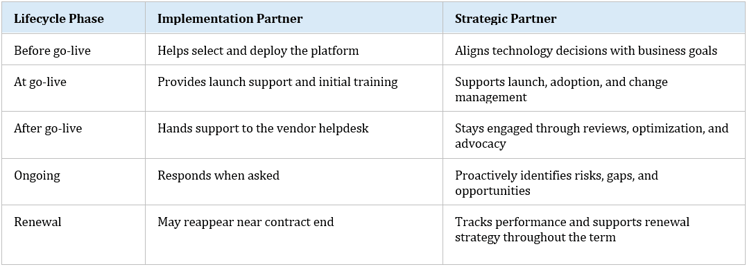
For communications technology to deliver long-term value, your partner cannot disappear after go-live. They need to stay engaged, informed, and accountable for helping your environment evolve with your business.
Why the Gap After Go-Live Is So Costly
The period immediately after go-live is when value is either gained or lost. A UCaaS or CCaaS platform may be properly configured on launch day, but that does not mean it will remain aligned with the business over time.
Internal departments may each adopt the platform differently, creating inconsistent usage across the organization. Settings and configurations can drift as teams change, new requirements emerge, or administrators make one-off adjustments to solve immediate problems.
Meanwhile, platforms continue to evolve by releasing new features, AI-enabled tools, reporting capabilities, integrations, and security updates on a regular basis. Without someone actively watching the roadmap and translating those changes into business impact, many organizations never take advantage of capabilities they are already paying for.
Then there is the risk component. Communications environments touch customer conversations, internal collaboration, call recordings, retention policies, routing logic, emergency response, and compliance requirements. If no one is reviewing the environment proactively, issues may not surface until they have already created operational pain.
The cost of post-implementation neglect is rarely one dramatic failure. More often, it shows up quietly: lower utilization, frustrated users, unresolved inefficiencies, avoidable support tickets, missed feature value, and weaker leverage at renewal.
What a Strategic Partner Actually Does
A true strategic communications partner understands that go-live is the starting line, not the finish line.
That support should include proactive health checks. Instead of waiting for something to break, a strategic partner reviews platform utilization, configuration, performance, and support trends on a recurring basis. The goal is to identify what is working, what is underused, and what needs attention before it becomes a larger issue.
It should also include an optimization roadmap. This is a living plan that tracks business priorities, platform capabilities, upcoming needs, and opportunities for improvement. For example, one quarter may focus on improving call routing and reporting. Another may focus on department-specific training or evaluating AI-enabled features. The roadmap keeps the platform tied to business goals instead of letting it become another tool that slowly drifts out of alignment.
Adoption support is another critical piece. IT leaders should not have to own every communication, training refresh, or user enablement effort alone. A strategic partner can help communicate changes, support department-specific retraining, and translate technical updates into practical business value.
Vendor advocacy matters, too. When issues need to be escalated, clients should have a named contact who understands their environment and can help move conversations forward. At renewal time, that same partner should already know what has been used, what has not, where the vendor has delivered, and where there may be room to negotiate.
Finally, a strategic partner helps clients make sense of what is next. AI, automation, analytics, integrations, and customer experience tools are moving quickly. Not every new feature needs to be adopted immediately. The right partner helps determine which capabilities are relevant, which can wait, and which may create meaningful operational value.
The Business Case for Ongoing Partnership
Ongoing partnership creates value because communications technology is not static. Businesses change. Platforms change. Users change. Customer expectations change.
When someone is actively managing that evolution, organizations are better positioned to improve platform utilization, reduce avoidable IT workload, resolve issues faster, and make smarter decisions at renewal. They are also less likely to be surprised by configuration gaps, compliance concerns, or unused features that could have supported a business priority.
In other words, ongoing support helps protect the investment you already made.
For many organizations, the question is not whether they can afford strategic post-implementation support. It is whether they can afford to keep paying for platforms that are only partially understood, partially adopted, and partially optimized.
Questions to Consider
If you are unsure whether you have an implementation vendor or a true strategic communications partner, start with a few simple questions:
- Have they proactively contacted you since go-live?
- Do you have a named contact who understands your environment?
- Has anyone reviewed your platform configuration in the last 12 months?
- Do you know which features your platform has released in the last 12 months?
- Is anyone tracking utilization against what you are paying for?
If the answer to most of these questions is no, your organization may not have a partnership problem. You may have a post-implementation support gap.
Go-Live Is Only the Beginning
The difference between a communications environment that delivers on its promise and one that underperforms often comes down to what happens after implementation.
The right partner does not hand off the keys and walk away. They continue helping your organization optimize the platform, support users, manage vendors, evaluate new capabilities, and keep communications aligned with the business.
If you want more information on how CloudCare keeps your UCaaS and CCaaS environment optimized, supported, and aligned with your business long after implementation is complete, simply click below. Learn more about CloudCare from CTPros.